
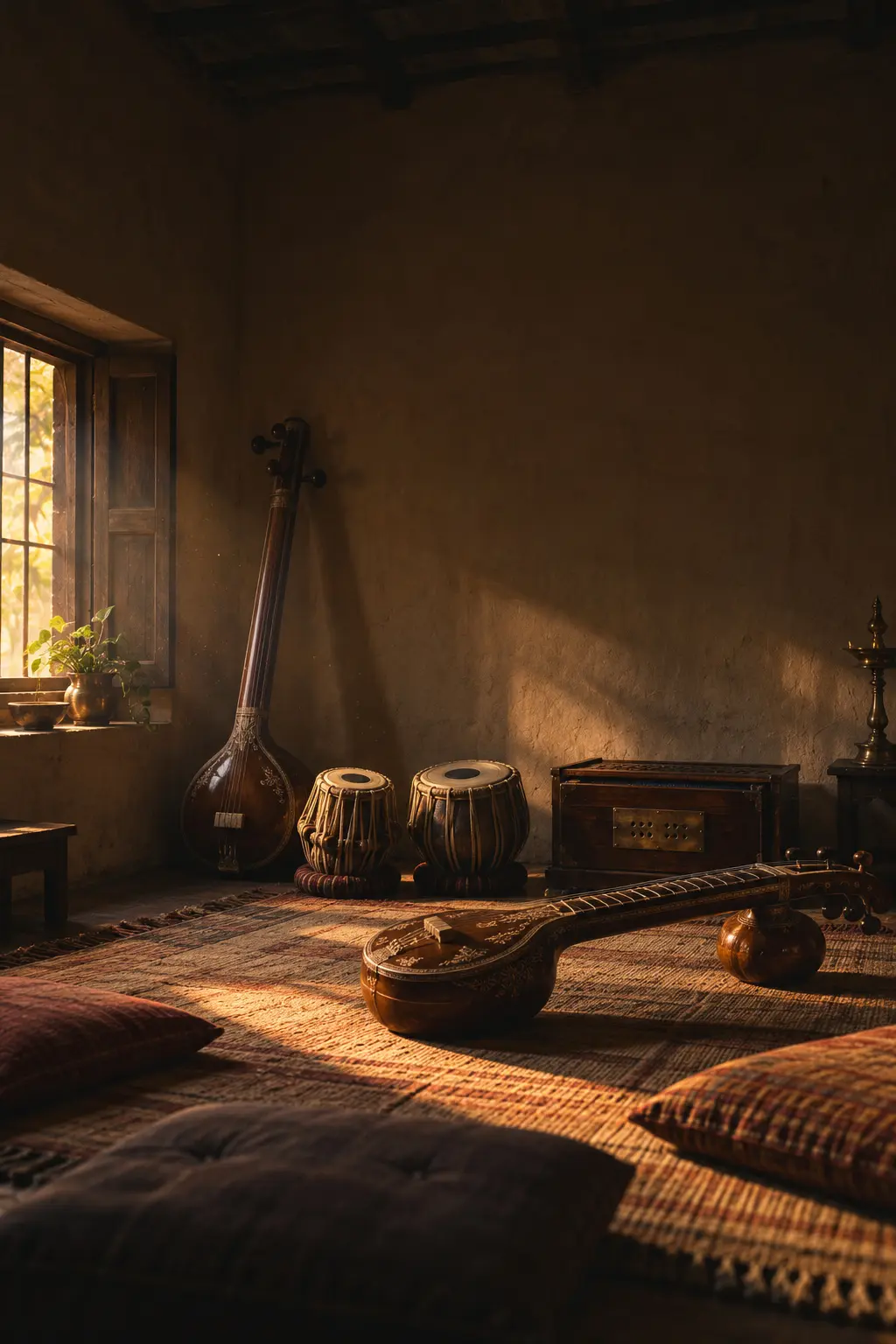
An evening in Raag Yaman
Music Room
Nine instruments, nine rooms. Swipe up to walk through.
01 — स्वर
Voice
The first instrument. Every other one on these walls was built to imitate it.
Hindustani vocal
02 — வயலின்
Violin
Arrived in Madras two centuries ago. Taught to sing gamakas, it never went back.
Carnatic violin
03 — வீணை
Veena
The instrument the goddess of learning is never without. Twenty-four frets, one carved body of jackwood.
Saraswati veena
04 — மிருதங்கம்
Mridangam
Two heads, two pitches. The right is tuned to the singer’s Sa; the left bends like a voice.
Carnatic percussion
05 — सितार
Sitar
Seven strings you play, thirteen you don’t. The sympathetic strings answer by themselves.
Hindustani sitar
06 — तबला
Tabla
A pair that talks. The black circle of syahi turns a drum into something that holds a note.
Hindustani percussion
07 — बाँसुरी
Bansuri
One length of bamboo, six holes and a breath. Krishna’s instrument; no keys, only fingers.
Hindustani flute
08 — Western classical
Piano
Yaman’s seven notes, written on five lines, are the Lydian mode. Same evening, different room.
Western classical
09 — Fingerstyle
Guitar
Film songs, rock, the first chords every teenager learns. Six strings, still in Yaman.
Fingerstyle
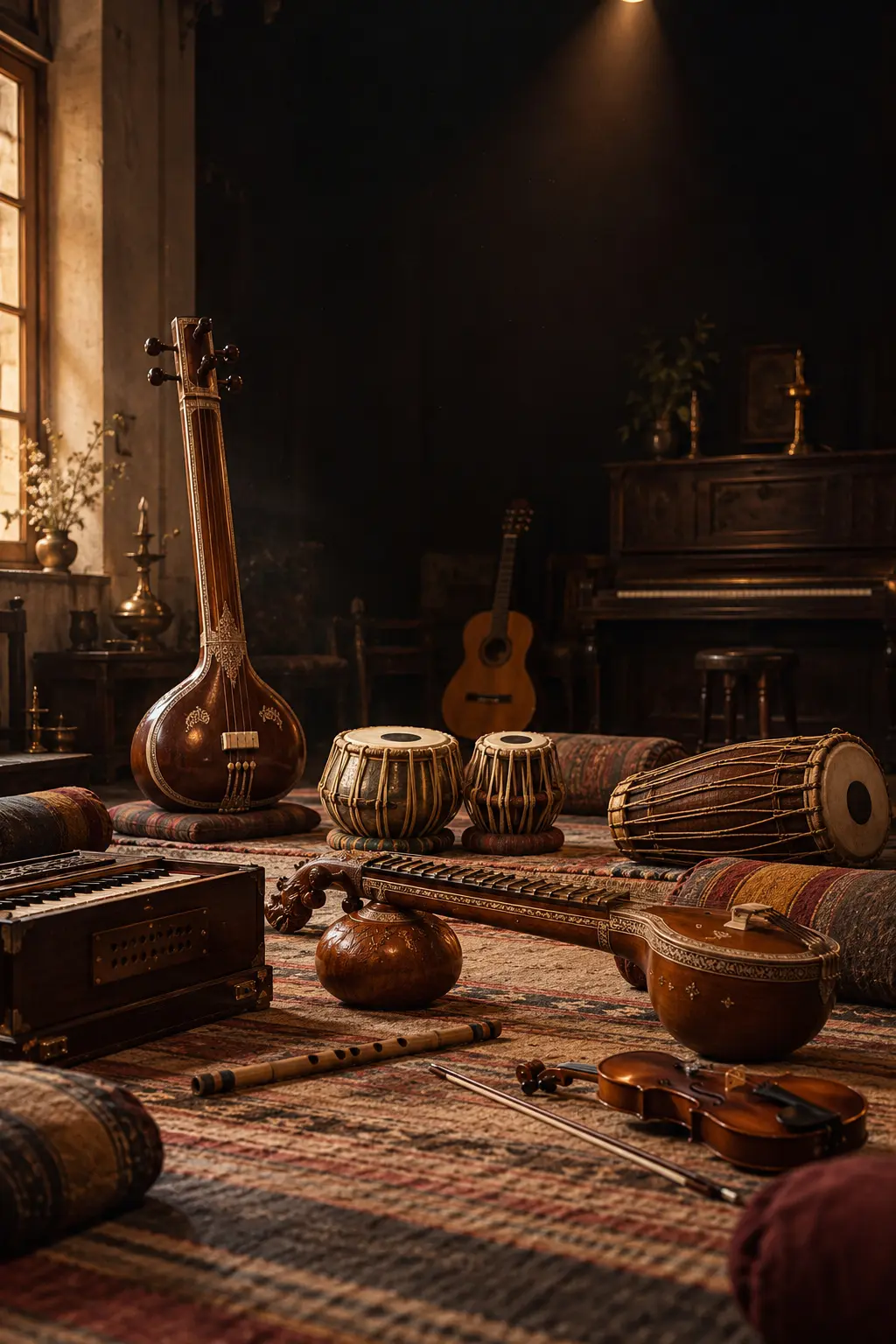
The listening room
Hear any of them again.
After the concert
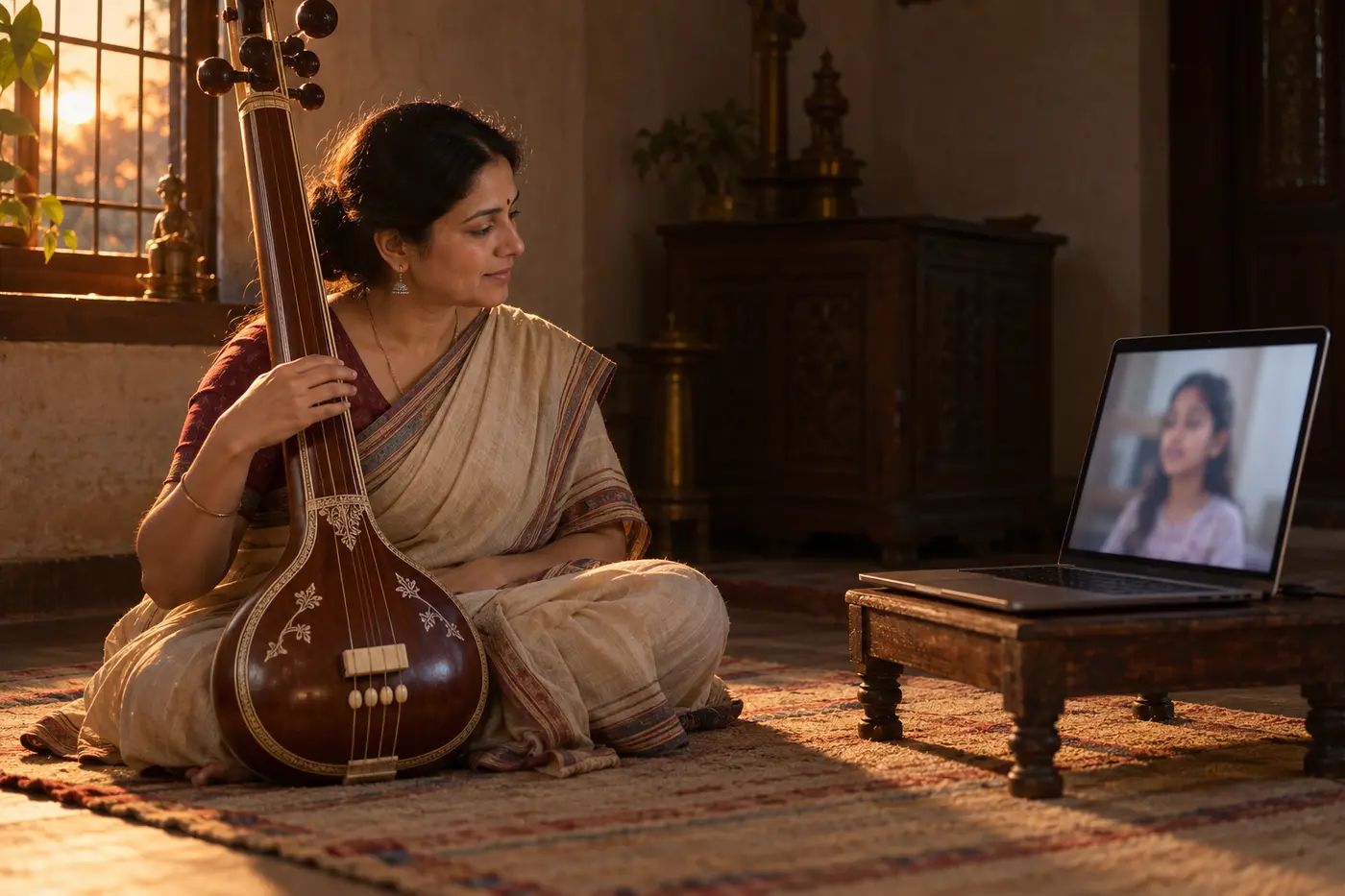
Every one of those rooms has a teacher. This is the software in their room.
Music Room gives every learner a standing weekly place, turns cancellations into make-ups instead of empty hours, carries practice home with the teacher's own voice — and collects fees by UPI.
The idea
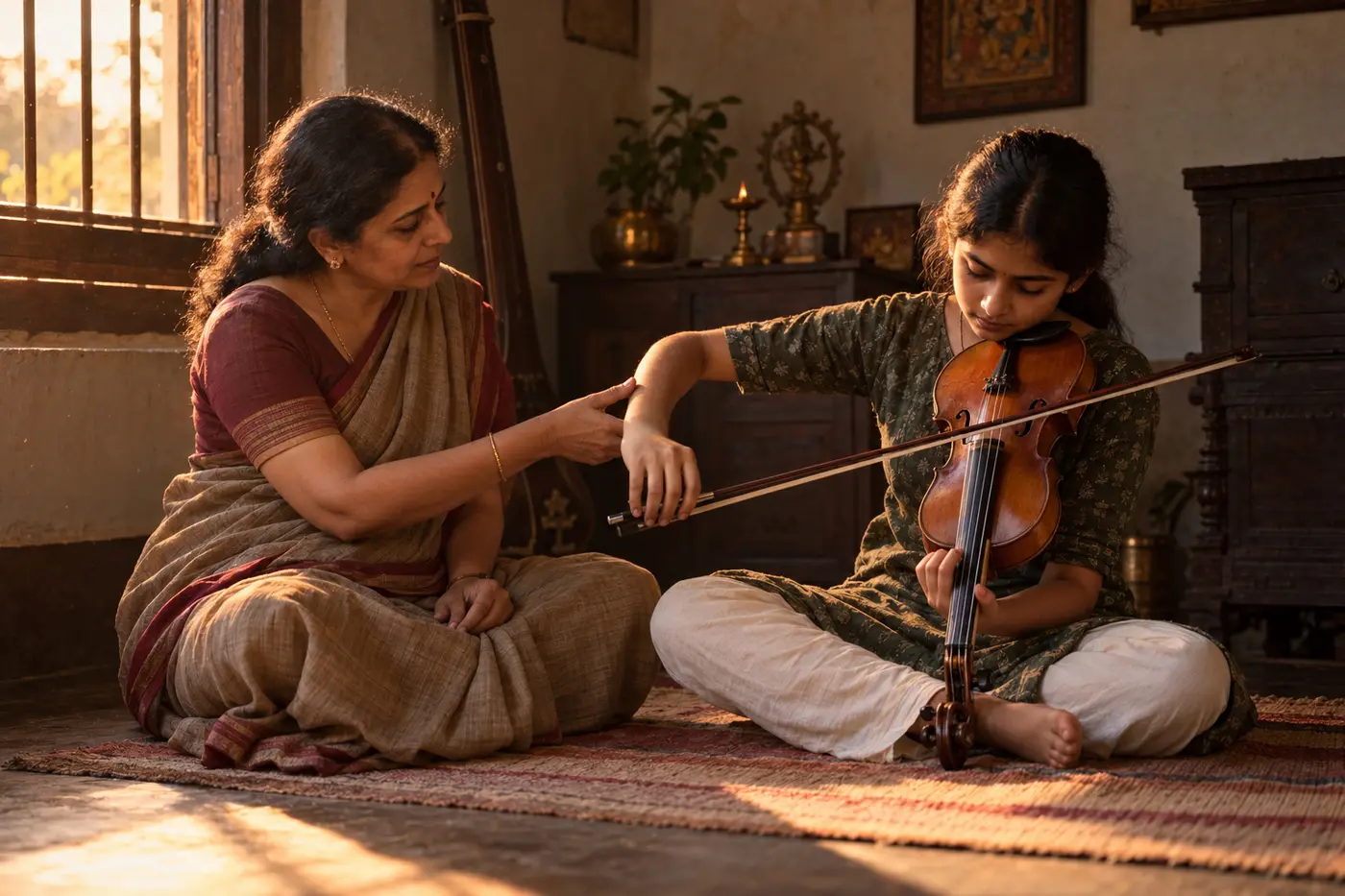
A lesson isn't a booking.
It's a seat someone owns.
Aarav owns Thursday at five. When he can't come, he doesn't cancel — he lends his seat. Learners holding make-up credits can take it. Your hour stays full, he gets a credit, and nobody had to message you.
Standing weekly places
Recurring lessons anchored to your local time, correct for students abroad even when their clocks change.
The slot exchange
A released place opens instantly to learners with credits. Make-ups refill empty hours instead of adding new ones.
Swaps with consent
Ananya wants Meera's Thursday. You propose it, both families agree privately, both lessons move together — or neither does.
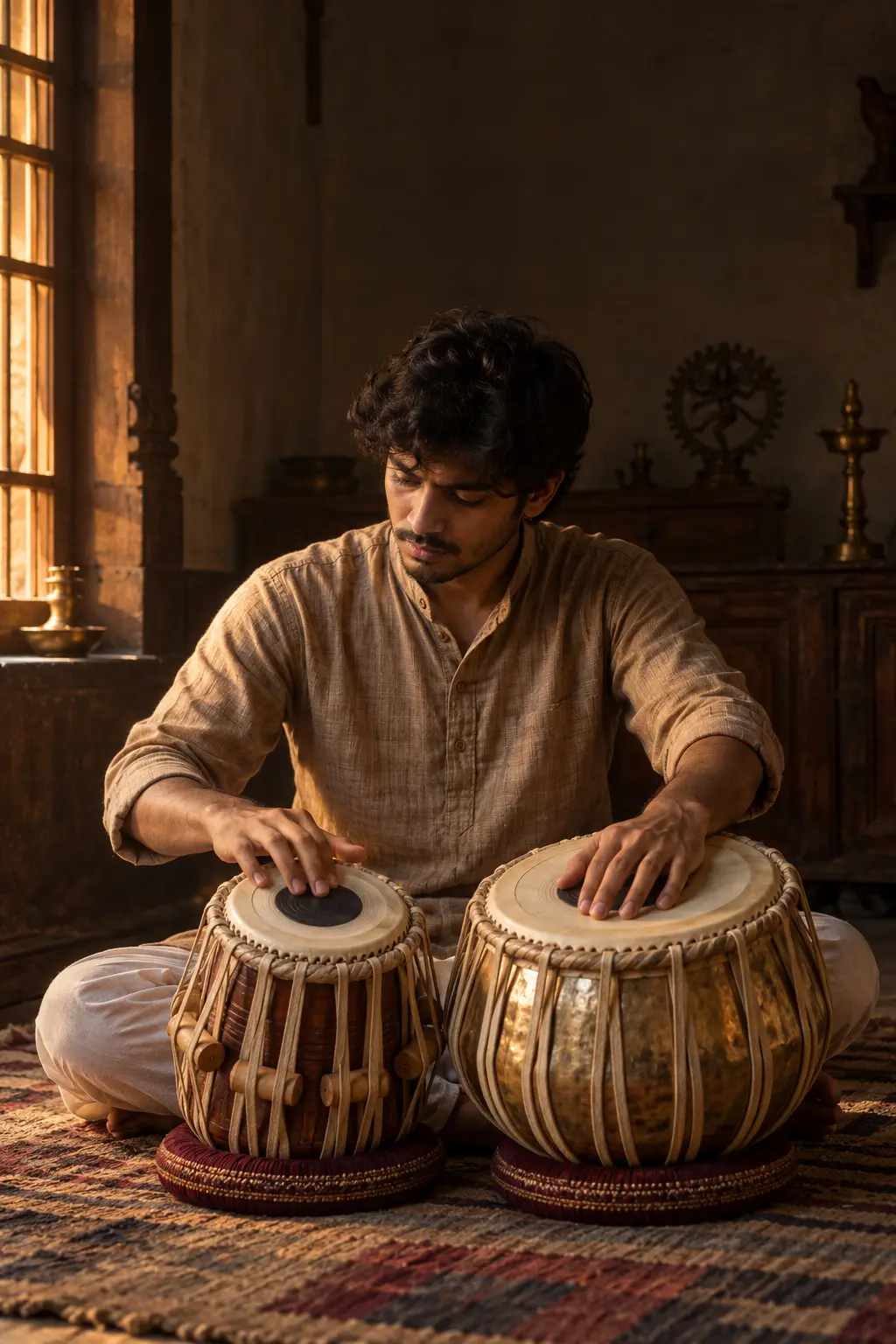
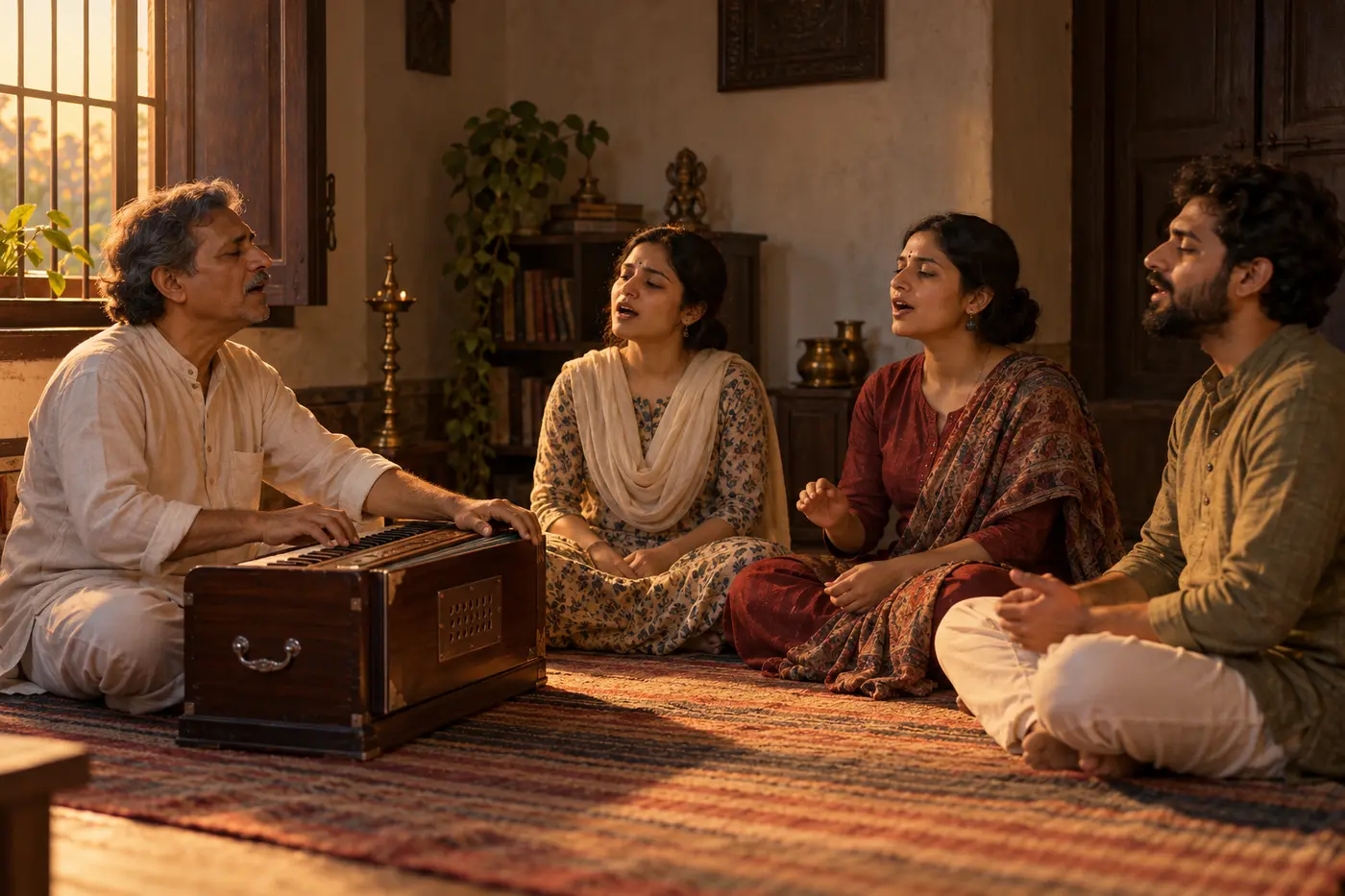
Theka with the tala keeper, then speak the bols aloud.
Between lessons
Forty-five minutes with you. Six days on their own.
Practice room at their sruti. A tanpura tuned to each learner's Sa, a rhythm keeper for Adi tala, Teentaal or 6/8, and a timer that logs practice.
Your voice, not a typed paragraph. Record the phrase or the correction in thirty seconds. The family hears it with this week's goal.
WhatsApp stays the channel. Families open a private link — no app to install, no password. Every change writes its message for you to send.
The business side, without the paperwork.
Fees by UPI
Monthly fees raised in one tap. Families pay straight to your UPI ID. You confirm, they get a receipt. No gateway charges.
Students anywhere
Teach from Hyderabad to New Jersey. Each family sees lessons in their own time, correctly through daylight-saving changes.
Teachers together
Run a studio with colleagues or link independent teachers into a circle — cover for each other, refer students, share a recital.
Free while we build it with our first teachers.
Start your studio